
Kashmir and pashmina – a background
Like many exclusive materials, trade and manufacturing began on the trade routes between Asia and Europe thousands of years ago.
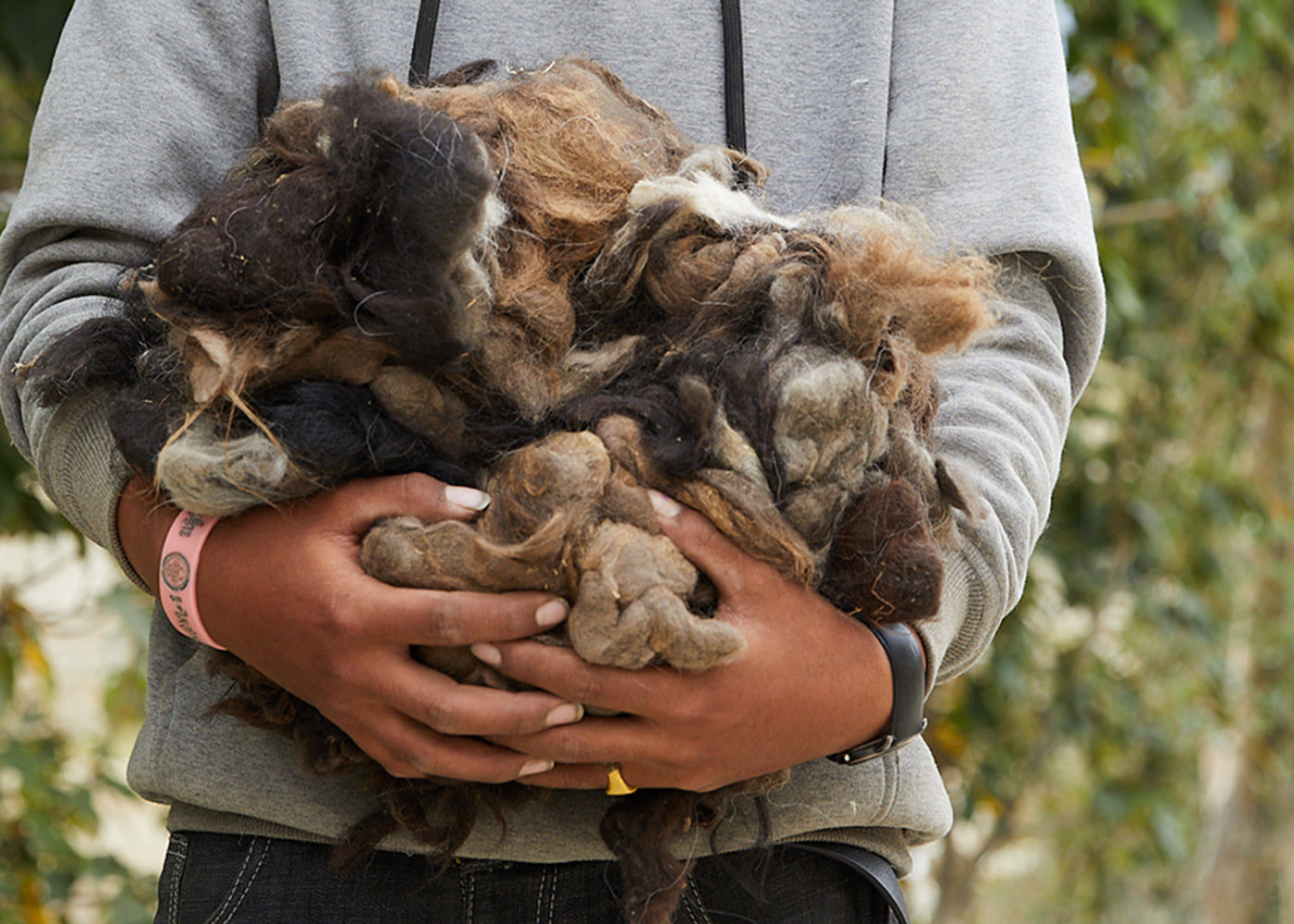
At high altitudes in the Himalayas from Kashmir, Nepal, to the Mongolian plateau, herds of goats live with their shepherds. It is the fine “down” wool on the lower body that warms the goats at very high altitudes.
The fiber is also known as pashm (Persian for wool) or pashmina.
References to wool shawls appear in texts preserved from the 4th century BC.
The name originates from a specific breed of goat from Kashmir, where production is believed to have begun in the 13th century. During the 18th and early 19th centuries, Kashmir had a thriving industry producing shawls from goat down imported from Tibet and Tartary via Ladakh.
The shawls were introduced to Western Europe when General Napoleon Bonaparte sent one to Paris from his campaign in Ottoman Egypt.
Cashmere is an exclusive material, as it is actually rare and difficult to obtain. It takes the wool of several cashmere goats to make a single garment, and since the fibers can only be collected for a short period each year, supply is naturally limited.
Unlike many other materials, cashmere cannot be mass-produced on the same scale.
Quality cashmere is often produced in small volumes and requires meticulous craftsmanship at every step. This is also one of the reasons why cashmere rarely loses its value and is often appreciated on the secondary market.
WHY INVEST IN A CASHMERE SWEATER – A STYLISH CLASSIC
UNRIVALED SOFTNESS
Cashmere is known for its exceptional softness – a characteristic that is due to the fineness, length, and origin of the fibre. The wool comes from the soft undercoat of Cashmere goats, which is gently combed by hand during the spring moult, when the goats naturally shed their wool. This way, only the finest fibres are collected – without the coarse outer hairs.
Cashmere fibers are thinner than both sheep's wool and merino wool, longer in structure, and almost completely free of scales – meaning they neither sting nor irritate the skin. The long fibers also provide strength and make it possible to spin threads that combine durability with an unrivaled soft feel against the skin.
WARMER THAN OTHER WOOL
At first glance, you might think that cashmere doesn't provide as much warmth, precisely because the material is so fine and thin – but in fact it's the opposite. Cashmere goats live in extremely cold climates and have very little subcutaneous fat, which means they develop a dense, insulating undercoat to protect themselves from the cold.
Because of this, cashmere has very good thermal properties in relation to its weight and often insulates better than regular wool. This means that a thin cashmere sweater can keep you warm – or warmer – than a coarsely knitted sweater made of sheep's wool, but with a significantly lighter feel.
KEEPING SHAPE AND APPEARANCE
Synthetic materials are now common in knitted garments, mainly due to their low cost. Modern manufacturing techniques attempt to mimic the properties of wool, but the result is often something completely different. Synthetic garments tend to stretch, lose structure and pill more.
Cashmere garments, on the other hand, retain their shape, softness and luster significantly longer than many other materials – and even when compared to regular wool. Cashmere fibres are both finer and longer, which means they are twisted more tightly and evenly when spun. The result is a yarn that is more stable and elastic, which helps the garment maintain its fit over time.
SIGNIFICANTLY LESS BUBBLES
All knitted garments made of wool can pill, and this also applies to cashmere.
But the difference lies in how the garment handles pilling over time.
Thanks to cashmere's long, thin, and even fibres, the piles are both fewer and looser than on garments made from synthetic materials or coarse wool. The piles in cashmere are also much easier to remove with a wool comb or a pile machine, without damaging the garment.
After you’ve worn your cashmere knitwear several times, these small bumps may appear on the surface where the fabric has been in contact with excessive friction, causing the fibers to bunch up . But don’t worry – bumps are not an indication of poor quality cashmere. They are a result of wearing such a fine fiber and an example of the natural wear and tear that comes with a well-loved garment. It’s almost impossible to avoid bumps in cashmere when you wear your garment, but you can remove them with minimal damage to the garment.
HOW TO REMOVE PILLS IN CASHMERE
You can easily remove pilling from cashmere with a good-quality cashmere comb. Simply lay the garment on a flat surface and gently brush against the fabric to see the fuzzy layer disappear.
Finally, don't pick at the dots.